

Commercial Organics Diversion Requirements
The City of Austin requires food-permitted businesses to provide their employees convenient access to diversion options that keep organic material out of the landfill. Organic material can include unused food, food scraps and food-soiled paper. Diversion options can include donating food, feeding animals and/or composting.
Who is responsible?
The business owner and manager are responsible for meeting the City’s organics diversion requirements. Typically, the person who oversees the organics diversion program submits the organics plan.
What do I need to do?
1. Submit an organics plan
You must submit an organics plan every year, between October 1 and February 1. This plan is a report on how the business meets all organic diversion requirements. You will need these items to fill out your organics plan:
- An invoice or contract receipt from your licensed hauler (only if a hauler takes away your organics) with:
- Size and number of organics containers
- Frequency of collection
- Your food permit number from your permit, previous records or a letter/email from Austin Resource Recovery.
- Knowledge of the organics diversion option(s) your business provides to employees (donating food, feeding animals or composting).
- Placement of indoor and outdoor organics containers at your business.
- Information about how and when you educate your employees on your organics diversion program.
2. Provide employees access to at least one organics diversion method
Diversion methods can include:
Donating food to people
Donate extra food to food banks, soup kitchens or shelters.
Feeding animals
Donate or contract to provide food scraps to local farms.
Composting
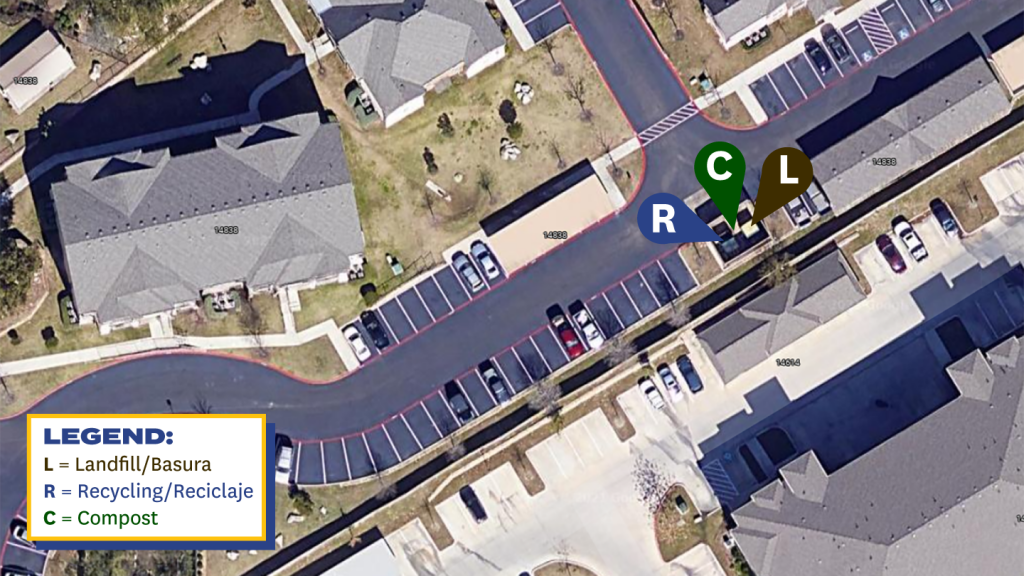
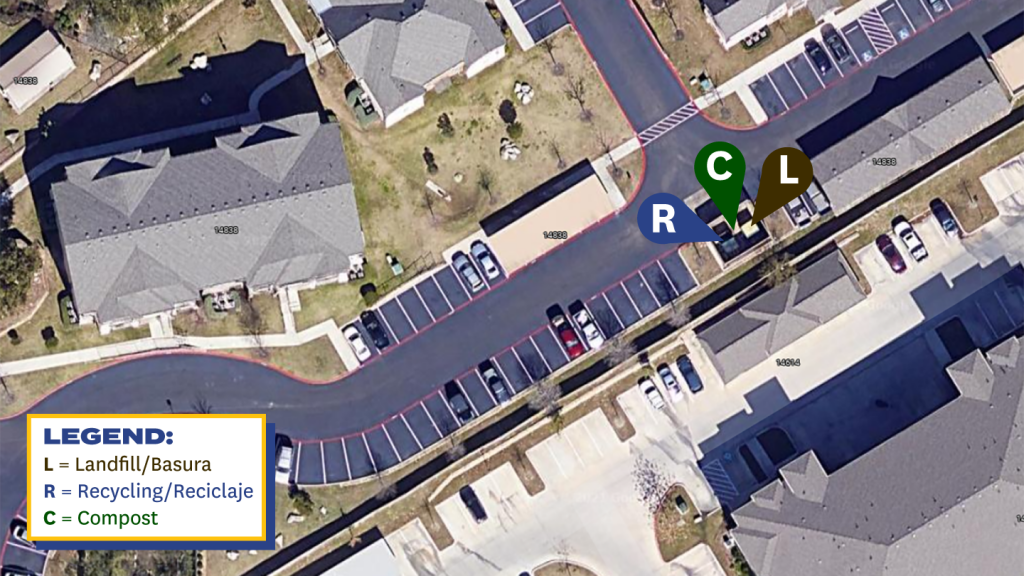
Consider contracting with a licensed hauler, sharing services, connecting with a farm, etc. All outdoor organics dumpsters and carts must be within 25 feet or closer to all landfill trash dumpsters and carts. Organic material can include:
- Extra/unsold food
- Food scraps (including meat and dairy products), expired food, coffee grounds
- Landscape trimmings and flowers
- 100% paper or cardboard products generated by employees (including paper towels, napkins, pizza boxes, 100% paper food containers, coffee filters, tea bags)
- BPI-certified compostable items (including bags, utensils, cups and plates that are labeled as “compostable”)
- Landscape trimmings and flowers
3. Post signs
All signs must:
- List which materials are accepted in each container (for example, "unused food," "food scraps") or type of organic diversion (for example, “food donation,” “organics,” “compost”).
- Provide information in two languages.
- All indoor bins and shelves devoted to organic diversion must have signs on or near them.
- All outdoor organics containers must have signs on or near them if you pay for organics services. Contact your licensed hauler to add landfill, recycling, or composting decals to their outdoor containers.
Get free organics posters
- Get free food donation posters in English and Spanish.
- Get free composting posters in English and Spanish, Arabic, Korean, Mandarin and Vietnamese.
4. Provide educational resources to your residents and employees
These items must be provided in print or electronically, in two languages, within 30 days of hire or move-in, upon program changes, and every year.
Create educational resources based on the organics diversion you provide
Donating food to people
- Post the food donation sign near all donation work and/or storage areas.
Feeding animals
- Create a custom organic sign for the foods your business feeds animals. Post your custom organics sign near all indoor organics bins.
- Create a map of your outdoor organics containers. See a sample map.
Composting
- Show the Commercial Organics Education Videos.
- Post the composting sign near all compost collection and/or storage areas.
- Create a map of your outdoor compost containers. See a sample map.
Document when you provide the educational resources
- Download and edit the sample training log to set a regular training schedule.
- Download and edit the sample attendance log or start archiving your educational emails to document attendance.
Watch commercial organics diversion videos
The Universal Recycling Ordinance (URO) supports Austin's zero waste goal. The goals of the ordinance are to extend the lifespan of local landfills, reduce harmful environmental impacts, encourage economic development, and support the Environmental Protection Agency’s (EPA) food recovery hierarchy.
Violations of the URO (Austin City Code Chapter 15-6) are a Class C misdemeanor, punishable by fines up to $2,000 per day, per offense.