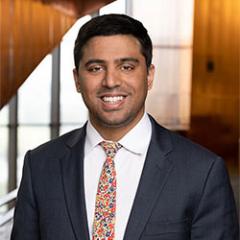
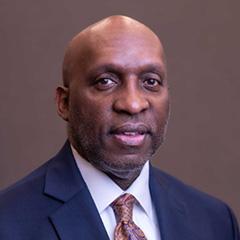
Mayor Pro Tem: Sheryl Cole (Council Member Place 6)
Official Term: June 15, 2006 – June 15, 2015
First elected to City Council in 2006, Council Member Sheryl Cole is the first African American woman elected to the Austin City Council. A resident of Austin for over 25 years, Council Member Cole earned her B.A. in accounting from the University of Texas and became a Certified Public Accountant in 1986, working for two years with the Big Five accounting firm Ernst & Young. In 1989, Council Member Cole returned to the University of Texas for law school, earning her J.D. in 1991 and joining the law firm Wright & Greenhill. In 1995, Council Member Cole became staff counsel at the Texas Municipal League, where she served until 2001.
Council Member Place 1: Chris Riley
Official Term: June 15, 2009 – June 15, 2014
Council Member Chris Riley was born and raised in Austin. The son of Peter and Eva Riley, he attended Austin High School and served as a Congressional Page for Congressman J. J. "Jake" Pickle before attending Harvard College, where he graduated with honors in Economics. He then earned his law degree from the University of Texas School of Law. In 1990, he passed the bar and moved downtown. He worked as an attorney at the Texas Supreme Court for five years before entering private practice with Shields & Rusk, P. C. (later known as the Rusk Law Firm).
Council Member Place 2: Mike Martinez
Official Term: June 15, 2006 – June 15, 2015
Council Member Mike Martinez has devoted virtually his entire career to public service. Before taking office in 2006, Council Member Martinez served as an Austin firefighter for 13 years. In 1993, Council Member Martinez served as a Drill and Ceremony team member of the Austin Fire Department’s Honor Guard. During his tenure, he served as a leader in the firefighting community. In 2003, he was elected president of the Austin Firefighters Association where he led a successful public campaign to secure collective bargaining rights for Austin firefighters. He also served as the Chair of the Austin Firefighters Association Political Action Committee from 2001-2004, where he represented the interests of public safety professionals in elections and campaigns.
Council Member Place 3: Kathie Tovo
Official Term: June 15, 2011 – June 15, 2014
Prior to her election to City Council on June 18, 2011, Council Member Kathie Tovo worked extensively in public policy with a particular emphasis on issues related to families and schools. She served on the city’s Planning Commission, where she was an officer and member of the Comprehensive Plan, Codes and Ordinances, and Neighborhood Planning subcommittees. Her other city task force and commission positions included the Waller Creek Citizens Advisory Council; the Downtown Street Closure Task Force; Create Austin; the Downtown Arts Master Plan; the Planned Unit Development Stakeholders Process; and the Families and Children Task Force.
Council Member Place 4: Laura Morrison
Official Term: June 15, 2008 - June 15, 2014
Council Member Laura Morrison was first elected to serve as an Austin City Council Member in June 2008 and was re-elected to another term in May 2011. Although she works on all issues, her primary focus has been sustaining neighborhood character, protecting the environment, promoting affordable housing, supporting local businesses, and improving public health and social services. When working on any issue, Council Member Morrison always integrates transparency, collaboration and community involvement.
Council Member Place 5: Bill Spelman
Official Term: June 15, 2009 – June 15, 2015
Council Member Bill Spelman tries to bridge the gap between theory and practice. In his day job, he is a professor at the LBJ School of Public Affairs at the University of Texas, where he teaches courses in applied math and statistics, urban policy, and public management. Between 1997 and 2005, he was also executive director of the Texas Institute for Public Problem Solving, which trained 13,000 police officers throughout Texas in the practice of community policing. Before coming to UT in 1988, he spent seven years with the Police Executive Research Forum, a national association of big-city police chiefs, working with local police departments nationwide to develop the (then-new) concepts of community policing and the epidemiology of crime.