

Climate Adaptation and Resilience
Our climate is changing, and we're already experiencing the impacts.
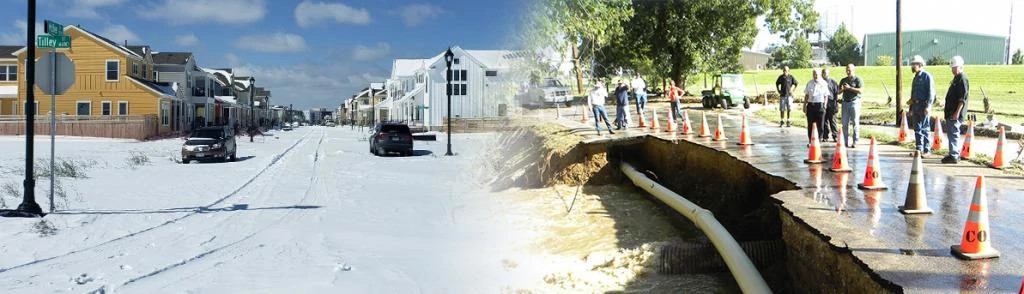
For decades, humans have relied on fossil fuels to power our lives. When we burn fossil fuels to heat and cool our homes, fuel our cars, and power up our electronics, greenhouse gases are released into the atmosphere, causing the earth to warm. This warming leads to more extreme weather events, including an increase in frequent and stronger floods, wildfires, heatwaves, winter storms, and more. Recent examples in Austin include 2020's Winter Storm Uri, the Halloween Floods of 2013 and 2015, and a historic heatwave that contributed to the Labor Day wildfires in 2011.
These events impact everyone, but the most affected are those with the fewest resources to survive and bounce back from a disaster event. This includes low-income communities, people experiencing homelessness, and communities of color who experience systemic racism. People in these communities have historically been most impacted by extreme weather and will continue to bear the brunt of impacts as climate change brings more extreme events.
To avoid the worst impacts of climate change, we must drastically reduce emissions locally and worldwide. We must also prepare for the changes that are already here through climate adaptation and resilience. This means upgrading infrastructure, planting heat-tolerant trees, and fostering strong policies and community networks to recover from disasters. Explore our resilience initiatives.
We envision Austin as a resilient, innovative, and equitable city ready to thrive despite future challenges. By working together, we can build a community that adapts, grows, and bounces back stronger.
Building Community Resilience
Resilience is the capacity of community, local governments, and businesses to coordinate and prepare for, respond to, and recover from both sudden shocks—such as extreme heat or flooding—and ongoing stressors like aging infrastructure, public health inequities, or rising housing costs, to ensure Austinites can adapt and thrive.
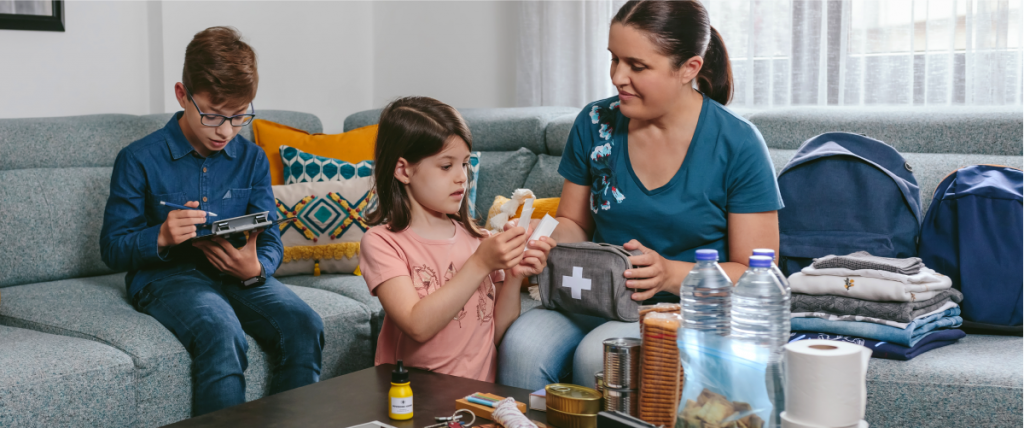
Taking steps to prepare in advance can greatly impact your safety and recovery in an emergency. A good rule is to have enough resources and supplies for your family to be self-sufficient for seven days. Before a disaster happens, here's what you can do:
- Make a plan
- Build a kit
- Know your neighbors
- Stay informed
Get more information about how to complete these steps.
Currently, the City is working with the Austin Independent School District, Travis County, and other partners to build a Resilience Network. Through this network, community members could access resources before, during, and after extreme weather events and other disasters.
We are also taking steps to update our existing assets and operations and design future infrastructure to withstand and bounce back from the effects of extreme weather. Here's some of what the City has done:
- Assessed our City's assets and operations (PDF; 3.3 MB)
- Created a Climate Equity Plan with a goal of net-zero emissions by 2040
- Planned for water availability for the next 100 years
- Adjusted our floodplains to anticipate more rainfall
- Created a portal for sharing information about wildfire in our community
- Planned a heat mapping and engagement project focused on communities most impacted
- Created a plan to preserve Austin's urban forest
- Planned for hazard mitigation when extreme events hit (PDF; 15.7 MB)
Want to learn more?
Explore Climate Adaptation & Resilience InitiativesResilience programs and resources from the City
The Office of Homeland Security and Emergency Management offers a suite of preparedness materials, including printable checklists, resources, and guides.
Austin Energy's Weatherization Assistance Program offers free home energy improvements to qualifying customers with low to moderate incomes.
Small businesses in Austin can use this resource to get prepared for, or recover from, economic and natural disasters.
The Office of Homeland Security and Emergency Management offers a suite of preparedness materials, including printable checklists, resources, and guides.
Austin Energy's Weatherization Assistance Program offers free home energy improvements to qualifying customers with low to moderate incomes.
Small businesses in Austin can use this resource to get prepared for, or recover from, economic and natural disasters.
Created in partnership with Go Austin/Vamos Austin (GAVA), this resource lists key emergency contacts and information for what to do in a fire, flood, tornado, heat wave, or power outage.
Learn more about Austin's floodplains and the risk of flooding where you live.
This grant strengthens Austin's urban forest by funding stewardship activities like tree planting, tree care, education, and disease control projects.