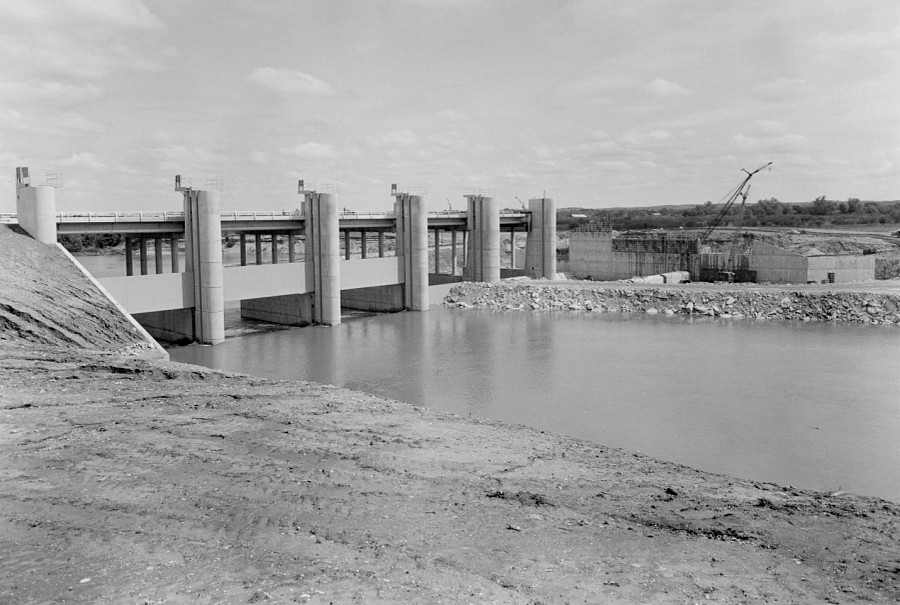
Longhorn Dam

Current Dam Status
Longhorn Dam is operating normally.
The floodgates are holding Lady Bird Lake at its usual level. No flood operations are currently underway.
About the Dam
The Longhorn Dam spans the Colorado River in East Austin and holds back the water that forms Lady Bird Lake. The City of Austin completed the dam in 1960, and Austin Water has operated and maintained it since 2018. The dam does not generate hydroelectric power. It holds the lake at a steady level throughout the year, supporting the trails and parks along the shoreline and keeping water moving down the Colorado River. Its floodgates control how much water passes downstream, holding the lake approximately 428 feet above sea level.
Austin Water works with the Lower Colorado River Authority to manage flows through dams on the Colorado River. Coordination between the Tom Miller Dam upstream and Longhorn Dam downstream keeps Lady Bird Lake stable and helps the region respond to heavy rain and drought conditions.
Safety Near Longhorn Dam
During heavy rain and flood conditions, flows downstream of the Longhorn Dam can change quickly due to floodgate openings. When floodgate operations are underway, the dam's warning siren plays a rising tone called a slow whoop. It starts at a low pitch, climbs steadily to a high pitch, then falls back and climbs again. The rising pattern is meant to sound urgent and to stand out from everyday noise.
Longhorn Dam warning siren sample (MP3)
Follow these rules and cautions whether or not flood operations are underway:
Swimming in Lady Bird Lake is prohibited under City Code. This applies at all times, not only during flood operations.
Boaters should stay clear of the dam. Currents near the floodgates can pull a boat toward the dam. Stay in open water behind the line of buoys near the dam face and do not approach the gates.
Releases can happen suddenly during flood conditions, and water below the dam rises quickly during these operations. Stay out of the water near the dam, and move away from the shoreline if you hear the warning sirens.
For water levels and planned releases above Longhorn Dam, see the Lower Colorado River Authority's Flood Operations Report.
To learn how flood operations work across the Highland Lakes, see the Lower Colorado River Authority's flood information page.
History
The City of Austin built Longhorn Dam in 1960 to create a cooling reservoir for the Holly Street Power Plant in East Austin. The Holly plant was decommissioned in 2007, but the reservoir it created, now Lady Bird Lake, remains a central part of the city. Austin Energy managed the dam until 2018, when management was transferred to Austin Water. The dam's name comes from the location's historical significance as a low-water crossing where longhorn cattle forded the Colorado River on drives along the Chisholm Trail in the late 1800s.